


Food fads come and go. One year, acai is the must-have superfood, and the next year hemp hearts are in vogue.
These days, different experts promote all sorts of so-called superfoods.
And while each of these foods have merits, there’s one that stands above the rest.
This super-super-food has been eaten by people since ancient times.
I’m talking about organ meat – liver, kidney and heart.
What makes organ meat so special? (And superior to the muscle meat we’re used to eating?)
Well, a lot.
As far as nutrient density goes, organ meats are second to none. Gram for gram, they’re the most concentrated source of vitamins, minerals, healthy fats and essential amino acids.
I like to think of organ meats as nature’s multivitamin.
And even though organ meat has fallen out of favor in modern cuisine, this ancient, sacred food is too good for you to be forgotten.
7 Reasons to Add Organ Meats to Your Diet

1 – Organ Meats for Cardiovascular Health – CoQ10 is a super nutrient which plays a vital role in energy production and the prevention of oxidative stress. CoQ10 has been shown to reduce blood pressure, improve arterial health, and dramatically cut the risk of heart failure. Rather than starting a CoQ10 supplement, the most cost-effective and efficient way to add CoQ10 to your diet is by consuming beef heart, as it contains 4 times the amount found in muscle meat.
2 – Organ Meats for Optimal Joint Health – Amino acids are vital for nearly every biological process in the body – and especially for healthy joints. Heart contains twice as much collagen and elastin as does muscle meat (which means it is rich in the amino acids glycine and proline), and is essential for connective tissue and joint health. Just 3.5 ounces of beef heart contains 28.5 grams of amino acid-rich protein, compared to just 19 grams in 3.5 ounces of grass-fed beef.
3 – Organ Meats for a Robust Immune System – Vitamin D plays a key role in supporting our immune function and is extremely hard to get through food. If you’re not supplementing with Vitamin D and spend the majority of your time indoors, it’s likely you’re deficient. However, not all Vitamin D is equally beneficial – The bioavailability of D3 (cholecalciferol), the most biologically active form of Vitamin D, is far superior to that of D2 (ergocalciferol), as research has proven. Organ meats have some of the highest concentrations of naturally occurring vitamin D (D3) with liver and cod liver oil , opens in a new tabat the forefront.
4 – Organ Meats for Energy – Vitamin B12 not only helps convert food into glucose for energy, but supports memory, nerve function, and mood. Contrary to popular belief, B12 is not bioavailable in plant food source and may be one of the reasons millions of Americans are deficient. Obtaining B12 from whole food sources, such as liver and kidneys, provides the best way for our bodies to utilize this crucial vitamin. Kidney is a particularly high source of Vitamin B12, with just 1oz containing 7.8mcg., opens in a new tab
5 – Organ Meats for a Pain-Free Life – Promising research, opens in a new tab shows the protective qualities of omega-3 fatty acids against on-the-rise conditions like arthritis and rheumatoid arthritis. Organ meats are loaded with the omega-3 fats EPA and DHA, which must be obtained through diet. One 4oz portion of brain contains about 1 gram of both EPA and DHA.
6 – Organ Meats for Radiant Skin – Vitamin A promotes cell turnover, inhibits the activity of sebaceous glands and prevents comedone formation known to cause acne. Carotenoids, the plant source of Vitamin A, must be converted to the more-usable form, retinol, opens in a new tab by the gut mucosal barrier – an inefficient process for many as it requires great health of the small intestine. Liver, on the other hand, is the most concentrated source of retinol, with just 2oz containing 22,145 IU. And because Vitamin A is a fat-soluble vitamin, it must be consumed with fat in order to be absorbed and utilized – just another reason why organ meat is a better source than plants.
7 – Organ Meats for Healthy Moms and Babies – Folate (not to be confused with the synthetic form – folic acid) is critical to the development of healthy babies in the womb. While your doctor might have recommended a folate supplement, primitive tribes instead fed expectant mothers liver – which has high folate content, opens in a new tab – after a successful hunt. The Weston A. Price Foundation, opens in a new tab recommends 3-4 ounces of liver, 1-2 times weekly as ideal for pregnant women, based on the practices of ancient tribes. Consuming folate through liver is especially important if you’re following a Paleo-style diet, which can eliminate most other food-sources of folate.
Have you heard that pregnant moms shouldn’t eat organ meats because of risk of Vitamin A toxicity? While Vitamin A toxicity and deficiency are both very serious, it’s important to understand that the likelihood of hypervitaminosis A is quite low. One must consume an acute one time dose of 500,000 IU or a repetitive intake of 25,000 IU/day for several months. (A large serving of liver may reach the 25,000 threshold, but it must be consumed for several months for toxicity to set in.)
Furthermore, the Weston A. Price Foundation’s extensive work, opens in a new tab shows that hypervitaminosis A is much more likely in those who are deficient in other fat-soluble vitamins, especially Vitamin D (making the need to consume these two vitamins together even greater).
Isn’t Eating a Paleo Diet Good Enough?
Modern-day Paleo-dieters are more likely to feast on two Paleo-diet-staples – muscle meat and eggs – than the offal, opens in a new tab their ancestors ate. And while this may seem healthy, it can cause issues. Methionine is an amino acid found abundantly in both muscle meat and eggs. Higher intakes of methionine increase homocysteine, opens in a new tab production. Homocysteine is an amino acid that has the potential to be harmful when not recycled by the body properly. High levels in the blood have been linked to dementia, opens in a new tab, preeclampsia, cardiovascular disease, and pulmonary embolism to name a few. For homocysteine to be recycled, there must be adequate amounts of Vitamins B6, B12, folate, betaine, and choline present.
Fortunately, organ meats are a rich source of each of these nutrients, particularly B12. Beef liver contains three times as much B12 as kidney, seven times as much as heart, and about 17 times as much as ground beef.
Folate, opens in a new tab, a powerful player in the recycling of homocysteine, can be difficult to get enough of on a Paleo diet. Legumes, opens in a new tab are a great source of folate but find themselves on the do-not-eat list for strict SCD or paleo diets, thus making the need for organ meats even greater.
So, if your aim is to follow the healthful diets of our hunter-gatherer ancestors, it’s important to remember that offal was a consistent part of the ancestral diet. And if you aren’t interested in following ancestral practices? Modern research has helped reiterate the importance of the nutrients organ meats offer, no matter what diet you’re following.
How To Make Organ Meat a Consistent Part of Your Diet
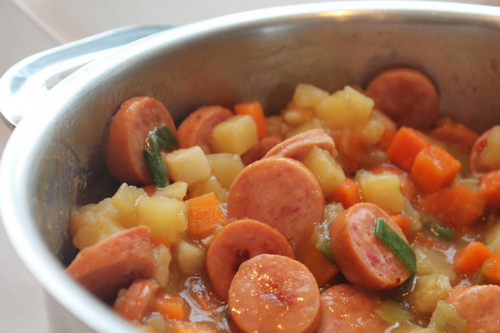
Most people are so put-off by the very idea of eating organ meats, that they can’t even complain about the taste – as they’ve never actually tasted them! However, once you’ve mentally pushed that aside and you actually taste organ meats (and feel better), I promise you’ll find it isn’t as bad as you might have expected.
And if the thought of eating liver, heart, or kidneys is more than you can handle, there are some alternatives to eating organ meats conventionally that can provide the same benefits. Whether your complaint is the flavor, texture, or inconvenience – I’ve got a solution that will put organ meats on your plate (or at least in your stomach).
My 6 Favorite Ways to Consume Offal
1 – Home-Made Liver Pills for the Taste Averse
- Chop liver (or kidney) into small, pill-sized pieces and spread on parchment paper
- Place small pieces onto parchment paper and freeze for 15 minutes (prevents sticking in the jar for next step)
- Transfer to freezer-safe container and freeze for at least 14 days before consuming.
- Swallow 1-2 pieces daily (choose based on specific dietary needs)
2 – Paleovalley’s Grass-Fed Organ Complex, opens in a new tab
If just the thought of cutting up liver to make homemade pills is too much for you (let alone actually eating organ meats!), you’re in luck. Paleovalley’s Grass-Fed Organ Complex, opens in a new tab is a nutrient-rich blend of grass-fed and finished beef liver, heart, brain and kidneys. It’s freeze-dried to retain nutrients and packaged in a tiny capsule. The capsules leave no aftertaste, is non-GMO and is free of all major allergens. This is an easy addition to your daily supplement routine.
3 – Fermented Cod Liver Oil (FCLO), opens in a new tab
Fermented cod liver oil is a powerful supplement backed by a ton of studies. It’s made from whole cod livers, which are fermented to extract the oil (instead of using heat). It’s rich in omega-3 fatty acids (even more than regular fish oil), Vitamin A and Vitamin D. When combined with grass-fed butter (like in this supplement), it’s also a source of the hard-to-obtain Vitamin K2.
4 – Organ Sausage
If you’re a hands-off person, buying high-quality organ sausage is a great way to get in your weekly offal. Here are some of my favorites:
- Beef Braunschweiger, opens in a new tab is the best choice for those new to organ sausage. It’s made with a 60/40 mix of ground beef and beef liver – meaning it has a milder organ-meat flavor. It’s fully cooked and ready to eat.
- Liverwurst , opens in a new tabis a blend of liver, heart, kidneys and beef. It’s the most popular organ sausage and provides a great diversity of nutrients. It has a strong, but not unpleasant flavor. Add this to soups and hot dishes, consume with eggs, or solo for a nutrient-dense snack.
- Headcheese, opens in a new tab is a beef sausage that contains heart and tongue – no cheese. It is seasoned with onion, pepper, and coriander – so it has a lot of flavor! It is fully cooked (you just need to slice it), making it great for quick breakfast or lunch on the go.
We recommend sausages from U.S. Wellness meats because we love the flavor and quality. If you’re shopping somewhere else, be sure the sausage you choose is free of soy, msg, dairy, sweeteners, binders, preservatives and additives and comes from grass-fed and finished animals only.
5 – Liver and Beef Hamburgers
This is my favorite way to get people started eating organ meats (and how my own family often eats offal). Using a Go to B000SAOF5S , opens in a new tab