


Medical Disclaimer: This content is for informational purposes only and does not constitute medical advice. Always seek the guidance of a qualified health professional regarding any health concerns or before making changes to your supplement routine.
You've likely been told for years that "too much" stomach acid is the villain behind your post-dinner discomfort, but for many women over 40, the opposite is often true. It's incredibly frustrating to finish a high-quality protein meal only to feel like a literal brick is sitting in your stomach for the next three hours. You're tired of the bloating, the occasional belching, and the standard advice to keep suppressing the very thing your body needs to actually break down food. If you've ever felt like your digestion has simply slowed to a crawl, you aren't alone.
Evidence indicates that a significant number of adults may actually struggle with insufficient acid production, which can stall nutrient absorption and leave you feeling heavy and sluggish. This guide will show you how betaine HCL low stomach acid support can act as the master switch for your digestive foundation. You'll discover the mechanics of how hydrochloric acid works as a gatekeeper, a simple protocol to test your own levels safely, and how restoring this balance promotes lasting digestive comfort and vibrant energy. It's time to stop guessing and start supporting your body's natural rhythms.
Key Takeaways
- Understanding how stomach acid acts as a vital gatekeeper to assist nutrient absorption and support a healthy microbial balance.
- Identifying common physical cues, like feeling as if food is sitting heavy in your stomach, that indicate your acid levels might need support.
- Learning the step-by-step protocol for using betaine HCL low stomach acid supplements to find the precise dose that promotes your digestive comfort.
- Discovering why Betaine HCL is most effective when paired with protein-rich meals to mimic the body's natural digestive process.
- Exploring the impact of the nervous system on your "gatekeeper" and how stress management assists in maintaining healthy acid production.
The Vital Role of Stomach Acid in Your Digestive Foundation
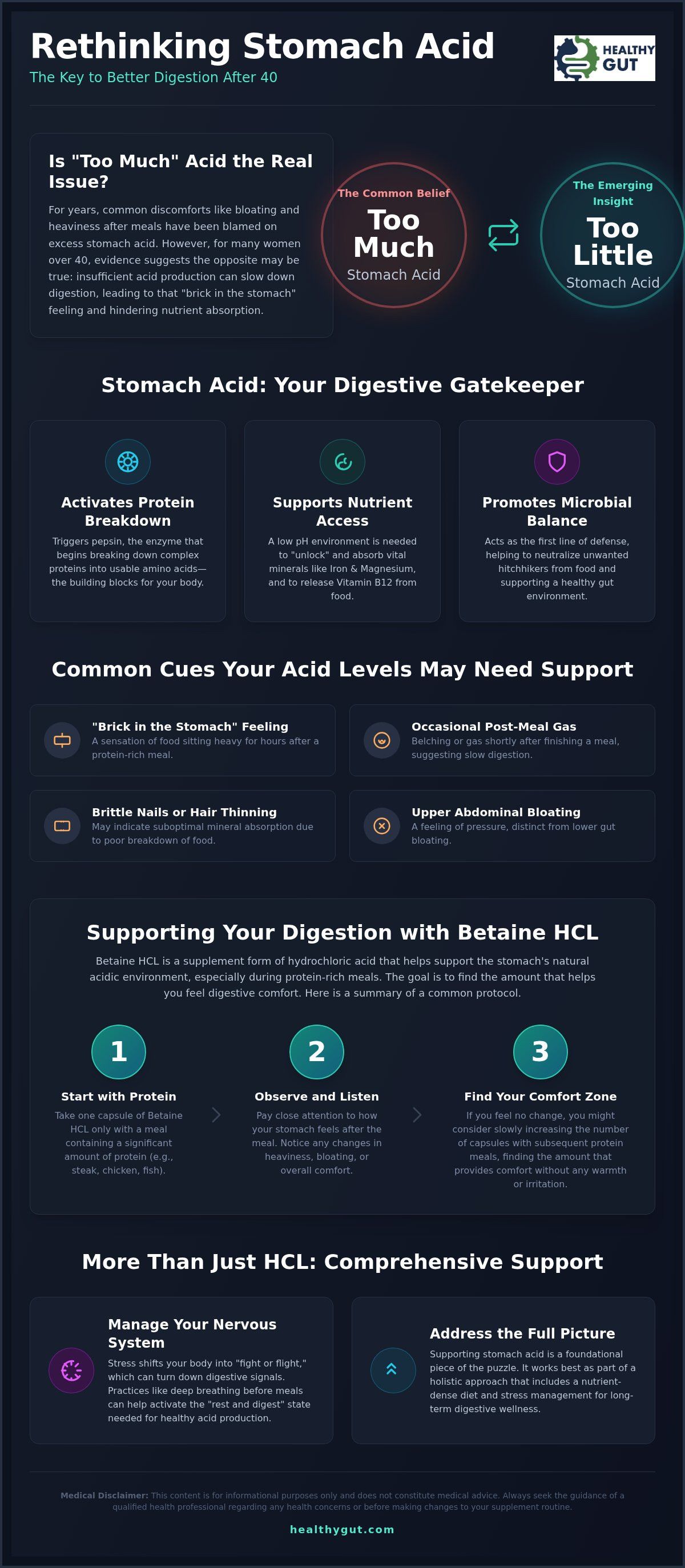
Stomach acid is often misunderstood as a source of discomfort, but it's the master switch for your entire digestive system. Hydrochloric Acid (HCl) functions as the primary gatekeeper of your digestive tract; it ensures that everything moving through is properly prepared for the journey ahead. You can think of stomach acid as the essential chemical trigger that activates downstream digestive enzymes, signaling to the rest of your organs that it's time to get to work. Without this vital signal, the rhythmic flow of digestion can grind to a halt, leaving you feeling sluggish after every meal.
Research suggests that stomach acid supports a healthy microbial balance by neutralizing unwanted hitchhikers that occasionally find their way into our food. It also assists in the meticulous breakdown of complex proteins into absorbable amino acids, which are the building blocks for your muscles, skin, and neurotransmitters. When you struggle with betaine HCL low stomach acid levels, your body has to work much harder to extract these essentials from your meals. Ensuring this acidic environment is maintained promotes the efficiency of your entire digestive engine.
Why pH Balance Matters for Nutrient Absorption
Maintaining a highly acidic environment isn't just about digestion; it's about accessibility. Some studies suggest, opens in a new tab that a low pH is required to "unlock" vital minerals like iron and magnesium, making them available for your body to use. Without sufficient acid, Betaine hydrochloride, opens in a new tab research notes that the chemical environment changes, which can hinder the release of Vitamin B12 from food proteins. According to the National Institutes of Health, opens in a new tab, stomach acid is required to release B12 from the proteins it is bound to in food. Additionally, stomach acid promotes the activation of pepsin, the enzyme responsible for starting protein digestion, ensuring that your dinner doesn't just sit heavy in your gut for hours.
The Gatekeeper Metaphor: Protecting Your Internal Environment
Visualizing the stomach as a protective barrier helps us understand why its strength is so vital. It acts as the first line of defense for your internal environment, assisting the immune system by vetting everything you ingest. When the gatekeeper is strong, the rest of your gut can function in peace. Maintaining a healthy acidic environment assists in keeping the microbial landscape balanced, which supports a healthy inflammatory response throughout the body. For women over 40, ensuring this gatekeeper is functioning optimally is a cornerstone of long-term wellness and digestive ease.
Common Signs Your Stomach Acid Levels May Need Support
It's incredibly frustrating to eat a healthy, protein-rich meal and feel like you've swallowed a stone. Many women find that by the time they reach their 40s or 50s, meals they once enjoyed now leave them feeling uneasy. You might notice a distinctive "brick in the stomach" or heavy sensation after finishing a steak or a heavy protein meal. This isn't just a sign of a large meal; it's often a signal that your natural acid production is struggling to keep pace. When considering betaine HCL low stomach acid support, it's essential to recognize how these subtle physical cues are actually your body's way of asking for assistance.
Common indicators that your digestive gatekeeper needs a helping hand include:
- Occasional belching or gas shortly after finishing a meal.
- A feeling of fullness that lasts much longer than it used to.
- Brittle fingernails or hair thinning, which may indicate poor mineral absorption.
- Occasional bloating that feels like pressure in the upper abdomen.
- Chronic dry cough that has no lung, viral or other cause. (This happened to Shay - turns out low stomach acid in perimenopause can cause the lower esophageal sphincter to relax and let gastric contents or gas irritate the throat. After visits to a pulmonologist, an ENT and chest xrays with no relief, Steven suggested her stomach acid wasn't keeping up to her increased protein intake. Who knew?)
Sensory Clues: Listening to Your Post-Meal Body
Listening to your post-meal body requires distinguishing between healthy satiety and uncomfortable heaviness. Satiety feels like a gentle "enough," whereas the "brick" feeling suggests food is lingering too long in the stomach. Evidence indicates that when protein isn't broken down quickly, it may begin to ferment, leading to that familiar occasional bloating. A wise practitioner looks at these signals not as failures, but as data points. When exploring the benefits of betaine HCL low stomach acid protocols, you're essentially learning to translate these sensory messages into actionable care.
Beyond the Stomach: Indirect Indicators of Low Acid
The impact of low acid extends far beyond the gut. Poor protein breakdown directly affects your energy levels and muscle maintenance, as your body lacks the amino acids needed for daily repair. Additionally, some research suggests that maintaining proper acidity supports a healthy inflammatory response in the gut. Interestingly, "acidic" sensations like occasional burning can sometimes be caused by too little acid rather than too much; a weak gatekeeper allows contents to splash where they don't belong. If you're noticing these patterns, you might find that supporting your stomach's natural pH assists in restoring that sense of post-meal lightness and vitality.
What is Betaine HCL and How Does It Assist Digestion?
Betaine HCL is essentially a supplemental form of hydrochloric acid that uses betaine, a compound derived from beets, as a stable carrier. You can think of it as a delivery vehicle. It carries the acid safely to your stomach, where it dissociates to help lower the gastric pH to a level that supports the natural digestive process. For many women over 40, the body's natural ability to produce this acid can begin to dip, making betaine HCL low stomach acid support a helpful tool for regaining post-meal comfort. It's a simple way to assist your body in reaching the acidic threshold it needs to function optimally.
Research suggests that this supplemental acid doesn't just sit in the stomach; it acts as a catalyst. When the pH drops, it signals the rest of the digestive tract to prepare for incoming nutrients. This shift is what allows your body to actually begin the meticulous work of breaking down your lunch. It's not just about the acid, though; it's about the chain reaction it starts. You can learn more about how these signals work in our Guide to Digestive Enzyme Supplements, opens in a new tab, which explains the essential connection between HCL and your body's natural enzymes.
The Importance of Pepsin in HCL Supplements
Pepsin is the primary enzyme responsible for protein digestion, but it's a bit of a diva. It won't work unless the environment is sufficiently acidic. Taking HCL without pepsin is often compared to having a car without an engine; you might have the frame, but you aren't going anywhere. This duo works in tandem to ensure your protein-heavy meals are broken down into the amino acids your body craves for energy and muscle maintenance. When they work together, they promote gut comfort and help maintain that feeling of lightness after eating. For those exploring the benefits of betaine HCL low stomach acid support, ensuring your supplement includes pepsin is a vital step for comprehensive results.
Safety and Cautions: Who Should Avoid HCL?
While support is wonderful, your safety is always the priority. You should avoid HCL supplements if you have a history of stomach lining sensitivity or active irritation or ulcers. Because HCL is an acid, it can be quite uncomfortable if your protective mucosal barrier isn't ready for it. Additionally, HCL should never be taken with certain medications like NSAIDs (aspirin, ibuprofen) or steroids, as these can thin the stomach lining and increase the risk of discomfort. Always consult a professional before starting a new supplement regimen. This ensures your approach is tailored to your unique health history and current needs.
The Betaine HCL Protocol: Finding Your Personal Comfort Zone
Every woman's body is unique, and your stomach's needs can change based on your stress levels, age, and even the time of day. The goal of using supplemental acid isn't to take as much as possible; it's to find the minimum effective dose that promotes your personal comfort and ease. When you're navigating betaine HCL low stomach acid support, you're essentially performing a gentle dialogue with your biology. You're looking for that "sweet spot" where your digestion feels effortless and that post-meal heaviness finally begins to lift.
The signal that you've reached your upper limit is often a mild "warm" or "tingly" sensation in the upper stomach area, similar to the feeling of drinking a hot cup of tea. If you experience this, don't worry. It's simply your body's way of saying it has enough support for that specific meal. When this happens, it's the clear signal to back down by one capsule for your next meal. This process should always be done under the guidance of a professional to ensure it aligns with your overall health goals.
Step-by-Step: The HCL Challenge
To begin the protocol, start with a single capsule at the very beginning of a protein-rich meal. It's vital to include at least 7 to 20 grams of protein during this testing phase to give the acid and pepsin something to work on. If you feel no sensation after Day 1, increase your dose to two capsules with your next protein meal on Day 2. Continue this gradual increase, adding one capsule per meal, until you feel that slight warmth. The HCL protocol is not about more acid, but about finding your stomach’s unique rhythm. Once you find that threshold, your maintenance dose is typically one capsule less than the amount that caused the sensation.
Assist your digestive gatekeeper with HCL Guard™, opens in a new tab
Adjusting for Different Meal Types
Your need for support will fluctuate depending on what's on your plate. A light summer salad with a few chickpeas requires far less HCL support than a dense ribeye steak or a festive holiday roast. Protein is the hardest macronutrient to break down, so your "gatekeeper" needs more strength when the protein load is higher. Learning to listen to your body’s needs meal-by-meal is the hallmark of a wise practitioner. Combining this supplement protocol with mindful eating, like chewing thoroughly and taking a few deep breaths before you start, promotes your body's natural acid production and assists the entire digestive journey.
Comprehensive Support: Why HCL is Only One Piece of the Puzzle
Understanding that your digestion is a complex, interconnected system is the first step toward lasting relief. While addressing betaine HCL low stomach acid levels is a vital part of the process, it rarely happens in a vacuum. Your stomach doesn't just produce acid on a whim; it responds to signals from your nervous system. If you're constantly in a state of high stress, your body’s "fight or flight" response naturally suppresses acid production to prioritize immediate survival over long-term digestion. This is why even the best supplement protocol works better when you address the environment in which it operates. You aren't just a collection of organs; you're a complex web of signals and responses.
Another critical piece of the puzzle is Intrinsic Factor. This protein is necessary for the absorption of Vitamin B12, a nutrient essential for your energy and neurological health. Without enough Intrinsic Factor, even supplemental acid might not be enough to ensure you're getting the most from your meals. Some people choose a comprehensive approach with HCL Guard™, opens in a new tab, which is formulated to support acid levels, motility, and the stomach lining simultaneously. This synergistic model ensures that the "gatekeeper" has all the tools it needs to function as a cohesive unit.
The Motility Connection: Ginger
Breaking down food is only half the battle; you also need to keep it moving. When food lingers too long in the stomach, it can lead to that heavy, uncomfortable sensation that many women over 40 know all too well. Bitter herbs like ginger and artichoke assist in the natural digestive flow by promoting healthy motility. These ingredients support the Migrating Motor Complex (MMC), which acts as the "housekeeping wave" of the gut. This wave clears out debris and ensures your digestive tract is ready for the next meal. Maintaining this rhythmic movement is essential for long-term gut health and prevents the stagnation that often follows a protein-heavy dinner.
Nervous System Support for Natural Acid Production
The gut-brain connection, opens in a new tab plays a starring role in how well your digestive gatekeeper functions. To produce acid, your body needs to be in the "rest and digest" state. If you're eating on the go or while scrolling through stressful news, your stomach might not get the message to start working. Simple habits can assist this process. Try taking three deep belly breaths before your first bite, or put your fork down between mouthfuls to slow your pace. These small acts of intentionality signal to your nervous system that it's safe to prioritize digestion, helping you maintain a healthy acidic environment naturally. When you calm the mind, you assist the gatekeeper in doing its job with ease.
Empowering Your Digestive Gatekeeper
Reclaiming your sense of post-meal lightness is possible when you understand the master switch of your digestion. You now have the tools to recognize when your stomach acid needs support and how to find your unique rhythm through a safe, methodical protocol. By addressing betaine HCL low stomach acid levels alongside motility and nervous system health, you create a foundation for vibrant energy and optimal nutrient absorption.
Digestion is a rhythmic journey that thrives on consistency and the right biological signals. You don't have to settle for the frustration of feeling heavy and sluggish after every protein-rich meal. Instead, you can choose to assist your body's natural processes with a sophisticated approach that respects your biology and supports your longevity.
Explore HCL Guard™ for comprehensive stomach acid and motility support, opens in a new tab.
This science-backed formula is specifically crafted for women over 40, featuring Intrinsic Factor for B12 support plus ginger to promote healthy motility and DGL for soothing. It’s time to move toward a future where every meal leaves you feeling nourished and at ease. Your digestive gatekeeper is ready for the support it deserves.
Medical Disclaimer: This content is for informational purposes only and does not constitute medical advice. Always seek the guidance of a qualified health professional regarding any health concerns or before making changes to your supplement routine.
Frequently Asked Questions
Can I take Betaine HCL if I have occasional heartburn?
Evidence indicates that occasional heartburn can sometimes be caused by low acid levels, but you should avoid HCL if you have a history of stomach lining sensitivity. If you're experiencing active irritation or have a known history of ulcers, adding more acid could cause discomfort. It's best to consult a health professional to determine the underlying cause. Many people find that supporting their natural pH levels assists in promoting long-term digestive comfort once the lining is supported.
How long does it take for Betaine HCL to start working?
You'll typically notice the effects of betaine HCL low stomach acid support during the very first meal you take it with. Because it works by directly lowering the pH of your current stomach contents, it assists in the immediate breakdown of that specific meal's proteins. You shouldn't expect a cumulative effect over weeks; instead, it's a meal-by-meal tool. Most users report a feeling of lightness and reduced post-meal heaviness within thirty to sixty minutes of finishing their dinner. If you have been increasing your protein intake, you may notice a difference immediately.
What happens if I take too much Betaine HCL by accident?
If you accidentally take too much, you'll likely feel a distinct warm or burning sensation in your upper stomach. This is your body's signal that the environment is too acidic for its current needs. To neutralize the excess acid, you can drink a large glass of water with a half-teaspoon of baking soda in water. This usually provides quick relief from the temporary discomfort. Always remember to lower your dose by one capsule for your next protein-rich meal.
Is it safe to take Betaine HCL every day?
It's generally considered safe to use HCL daily, provided you're taking it with meals that contain sufficient protein. Many women over 40 use it as a consistent part of their wellness routine to assist with nutrient absorption. According to the Mayo Clinic, certain forms of betaine are used for specific metabolic support, but for digestion, the goal is always to find your minimum effective dose. As your body's natural production improves, you may find you need less support.
Does Betaine HCL help with Vitamin B12 deficiency?
Evidence suggests that healthy stomach acid levels are required to release Vitamin B12 from the proteins in your food. While betaine HCL low stomach acid support assists this initial step, you also need a protein called Intrinsic Factor to actually absorb the B12 later in the digestive tract. This is why comprehensive formulas often include both HCL and Intrinsic Factor. Supporting this entire process promotes better energy levels and long-term neurological health by ensuring your B12 is bioavailable.
Can I take HCL if I don’t eat meat or high protein?
You shouldn't take HCL if your meal is low in protein or entirely plant-based without significant protein sources. Supplemental acid needs something to work on; without protein to digest, the acid can irritate your stomach lining. If you're eating a simple salad or a piece of fruit, your body's natural acid levels are usually sufficient. Save your HCL support for meals containing at least 7 to 20 grams of protein, such as those including beans, lentils, eggs, or fish.
What is the difference between Betaine HCL and regular vinegar for acid?
While apple cider vinegar is a popular home suggestion, it's significantly weaker than the hydrochloric acid your stomach naturally produces. Betaine HCL is a more concentrated supplemental form that closely mimics your body's gastric juice pH. Vinegar may provide a very mild assist for light meals, but it often lacks the strength needed to break down dense proteins. For those with significant digestive sluggishness, a targeted HCL supplement provides the precision and potency required to truly support the digestive gatekeeper.
Should I take HCL before, during, or after my meal?
The most effective time to take your HCL supplement is right at the beginning of your meal or about five minutes into eating. This allows the supplemental acid to mix thoroughly with the food as it enters your stomach, mimicking the body's natural release of gastric juices. Taking it on an empty stomach before you eat can lead to discomfort, while taking it after the meal might be too late to assist the initial stages of protein breakdown. Consistent timing promotes the best digestive results.
SEO and Compliance Risk Audit
Secondary Keywords Identified:
- Hypochlorhydria support
- Gastric pH balance
- Protein digestion for women
- Pepsin activation
- Intrinsic Factor benefits
- Digestive motility support
- B12 absorption support
Compliance Risk Mitigation:
- Risky Phrase: "HCL cures indigestion." | Fix: "HCL supports healthy digestion and promotes post-meal comfort."
- Risky Phrase: "Kills bad bacteria in the gut." | Fix: "Assists in maintaining a healthy microbial balance."
- Risky Phrase: "Treats B12 deficiency." | Fix: "Promotes the release and absorption of Vitamin B12."
- Risky Phrase: "Clinically proven to reduce bloating." | Fix: "Evidence indicates it assists with occasional post-meal bloating."
URL and On-Page SEO Recommendations
- URL Slug: betaine-hcl-low-stomach-acid-support
- Title Tag: Betaine HCL for Low Stomach Acid: Support Your Digestion
- Meta Description: Discover how Betaine HCL supports healthy stomach acid levels to optimize nutrient absorption and digestive comfort for women over 40.
Image List
- Filename: woman-over-40-enjoying-protein-meal.jpg | ALT Text: A smiling woman enjoying a nutritious protein-rich dinner to support healthy digestion.
- Filename: stomach-acid-gatekeeper-infographic.jpg | ALT Text: An educational diagram showing how stomach acid acts as a gatekeeper for the digestive system.
- Filename: betaine-hcl-supplement-capsules.jpg | ALT Text: Close-up of dietary supplement capsules containing Betaine HCL and Pepsin for digestive support.
- Filename: healthy-digestive-flow-ginger-artichoke.jpg | ALT Text: Fresh ginger and artichoke herbs which assist in promoting healthy digestive motility.
Article Markdown Assembly
Betaine HCL and Low Stomach Acid: Supporting Your Digestive Gatekeeper
Disclaimer
The information provided in this article is for general educational purposes only and is not intended to provide medical advice, diagnosis, treatment, or individualized healthcare recommendations. The information presented here should not be used as a substitute for advice from your doctor or other qualified professional who is familiar with your individual medical history and circumstances.
Medical Disclaimer: This content is for informational purposes only and does not constitute medical advice. Always seek the guidance of a qualified health professional regarding any health concerns or before making changes to your supplement routine.
You've likely been told for years that "too much" stomach acid is the villain behind your post-dinner discomfort, but for many women over 40, the opposite is often true. It's incredibly frustrating to finish a high-quality protein meal only to feel like a literal brick is sitting in your stomach for the next three hours. You're tired of the bloating, the occasional belching, and the standard advice to keep suppressing the very thing your body needs to actually break down food. If you've ever felt like your digestion has simply slowed to a crawl, you aren't alone.
Evidence indicates that a significant number of adults may actually struggle with insufficient acid production, which can stall nutrient absorption and leave you feeling heavy and sluggish. This guide will show you how betaine HCL low stomach acid support can act as the master switch for your digestive foundation. You'll discover the mechanics of how hydrochloric acid works as a gatekeeper, a simple protocol to test your own levels safely, and how restoring this balance promotes lasting digestive comfort and vibrant energy. It's time to stop guessing and start supporting your body's natural rhythms.
Key Takeaways
- Understanding how stomach acid acts as a vital gatekeeper to assist nutrient absorption and support a healthy microbial balance.
- Identifying common physical cues, like feeling as if food is sitting heavy in your stomach, that indicate your acid levels might need support.
- Learning the step-by-step protocol for using betaine HCL low stomach acid supplements to find the precise dose that promotes your digestive comfort.
- Discovering why Betaine HCL is most effective when paired with protein-rich meals to mimic the body's natural digestive process.
- Exploring the impact of the nervous system on your "gatekeeper" and how stress management assists in maintaining healthy acid production.